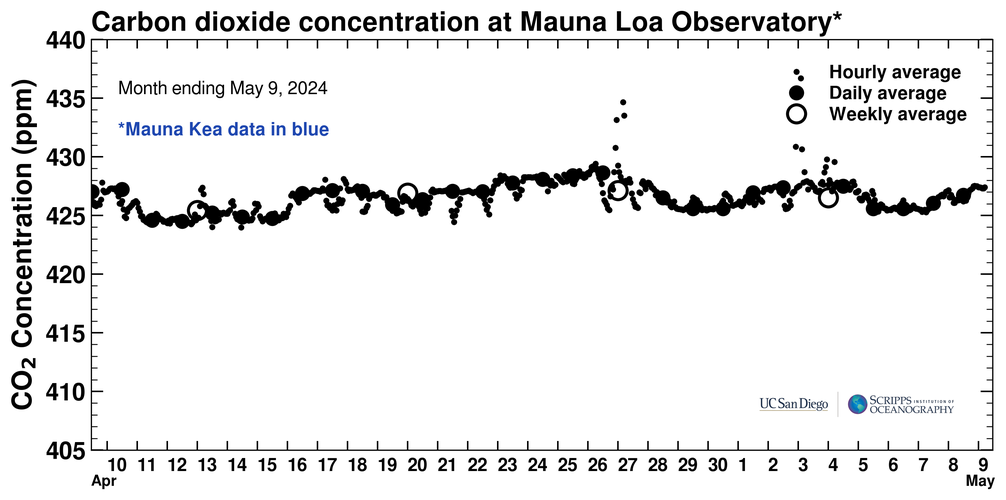
- As I pointed out last week, the US is going to have a lot of explaining to do, internationally.
- Given that the Obama administration has established a track record of being untruthful about NSA surveillance, it's going to be hard to credit their assurances going forward.
- Some sign of life in Congress. I think some one should point out how easy it would be for the NSA to identify most gun owners based on having all their phone/Internet records. Then maybe we can get a little bit of second amendment anger going to help out the fourth amendment.
- Interesting new green building material.
- Administration also slowing down on new energy efficiency rules.
Wednesday, June 12, 2013
Wednesday Links


Tuesday, June 11, 2013
Snowden and the Toxicity of the Internet
I think we are still operating with very partial information here. Glenn Greenwald has promised that he has thousands of documents from Snowden still, dozens of which are newsworthy. It's still very unclear how Snowden came to have access to the documents he seems to have, who he really is, whether his testimony is 100% accurate, or where he has gone now. I assume a lot more will come out in coming days and weeks.
With that caveat, here are a few thoughts: this case illustrates some long-standing concerns I have about the direction of society.
With that caveat, here are a few thoughts: this case illustrates some long-standing concerns I have about the direction of society.
Monday, June 10, 2013
Monday Links
- Suddenly the Guardian has become a must read for American political observers.
- USDA announcing new programs to help farmers cope with a climate of greater extremes.
- EIA estimates that global oil reserves are increased about 10% by tight (shale) oil.
- A more detailed technical taxonomy of possibilities for PRISM (requires some computer security knowledge in places).
Sunday, June 9, 2013
Weekend Links
- Possibly taking energy efficiency measures into account in home loans? Sounds good to me.
- Recent extreme flooding events in central Europe likely due to jet stream anomalies driven by climate change.
- The Guardian tells us who is responsible for the recent NSA leaks. I guess there are two lessons here: 1) the Internet lends itself to massive surveillance of the populace, but 2) it's very difficult to keep the massive surveillance secret.
Friday, June 7, 2013
Brainstorming a Few Hypotheses About Prism
So executives at major tech companies are doubling down on the denials that they know anything about PRISM, including Larry Page and Mark Zuckerberg. My first assumption was that the denials were legally compelled by the very orders under which they provided the data. However, after the Obama administration had confirmed the program's existence, there would be little incentive for CEOs to personally continue to dispute the facts. So what's going on here? I don't know, but here's all the hypotheses I can come up with:
- The tech executives do know about PRISM (in fact if not by name) but are continuing to deny it in the hopes of muddying the waters and limiting the damage to their company's brands internationally (this doesn't seem like it would be very smart given that more revelations seem likely, but it's at least a logical possibility).
- The tech companies have employees with clearances who have implemented PRISM at the behest of the government, and non-cleared executives, including CEOs, genuinely don't know what's occurring. If so, they are going to be outraged, and with every right.
- The NSA has gained access to company's internal data via some third party (eg a telco provider to the tech companies, or a hardware or operating system vendor who has provided equipment with a backdoor).
- The NSA has used technical means to break into the tech companies and install monitoring systems without their knowledge or permission (much as China has been trying to do).
- The reporting by the Washington Post and the Guardian mischaracterized PRISM, and for some hard-to-imagine reason, the administration has decided to confirm it rather than correct it or deny it.
I have to say that any of these would be fairly breath-taking. I await further revelations with great interest. I have a feeling there are a lot more shoes still to drop here.
Oh, in an aside, the Guardian is reporting from a supposedly knowledgeable US intelligence source that "We hack everyone everywhere. We like to make a distinction between us and the others. But we are in almost every country in the world" If that's true, not very much of it's been brought to light by the commercial security industry, suggesting that there are some interesting techniques in need of discovery.
Sustaining a City in a Long-Term Power Outage
A few comments on this fascinating study from Pittsburgh (site of Carnegie Mellon, which is a center of excellence at studying critical infrastructure issues). The key theme that emerges for me is the interaction of the liquid fuel system (particularly diesel) and the electricity system. In a short outage, lots of critical infrastructure has diesel generator backup, and so the hospitals, 911-call centers, and so on can continue to operate. However, they typically have limited fuel storage capacity (if for no other reason than that diesel doesn't keep indefinitely), and so in a long outage, the availability of diesel becomes critical to keeping everything together.
Friday Links

- The above is from the National Transportation Fuels Model at Sandia Labs. It models the processing and distribution system for oil and petroleum products with a view to predicting what would happen in the event of damage to or attacks on the system.
- It turns out that US cyber-spying is every bit as wide-ranging as Chinese cyber-hacking of US firms.
- Indeed, the US now pretty much has the legal framework of an authoritarian regime, even if it's a good way from using it to the max.
- A time lapse visualization of every nuclear explosion since 1945. Starts off slow but becomes strangely hypnotic as it gathers speed.
- An interesting analysis of what would happen to a particular US city (Pittsburgh) in the event of an extended power outage affecting the entire city. Things would start to go south pretty badly after the first few days.
US Exports and PRISM
It appears to me that the new revelations about the PRISM program are likely to hurt US commerce over time. If I'm a buyer at a non-US company and I'm contemplating putting my data on Amazon's cloud, using Google Docs, buying a Cisco router, even installing Microsoft Windows on my PCs, I now have to assume that the US company I want to do business with is in bed with the NSA. I have to assume that my enterprise data, my employee's personal data, etc, may be compromised by this new equipment or software. The company's denials clearly mean nothing (since the government has now confirmed PRISM, thereby making liars of them all). For all foreigners, you have to assume that anything you share on Facebook, send in a Gmail, say on a Skype call, etc, could be inspected by US intelligence.
In the short term, this will likely have little effect, since people will have limited choice, and it will take a while for the culture to shift. But in every internal debate about whether to use the American solution or some other homegrown option, this information is going to put a finger on the scale. Foreign governments are now going to have excellent reasons to promote and protect their homegrown software and equipment industries, since they know they can trust them. It will take years or even decades for this to play out, but "Made in America", or at least "Designed in California", just took a massive hit to the brand.
In the short term, this will likely have little effect, since people will have limited choice, and it will take a while for the culture to shift. But in every internal debate about whether to use the American solution or some other homegrown option, this information is going to put a finger on the scale. Foreign governments are now going to have excellent reasons to promote and protect their homegrown software and equipment industries, since they know they can trust them. It will take years or even decades for this to play out, but "Made in America", or at least "Designed in California", just took a massive hit to the brand.
Thursday, June 6, 2013
Hints of Climate Change Affecting the Electricity Grid
It's interesting reading the NERC 2013 Summer Reliability Assessment. Although it's not a focus of the report, reading between the lines you can see that climate change is going to have complex effects on the grid, and all of them increase the stress on it:
- Weather extremes, particular heat-waves, cause higher peak demands, and larger swings in power demand. For example, p1 refers to challenges in the Texas interconnect (ERCOT) as follows: "The Anticipated Reserve Margin for ERCOT is 12.88 percent for summer 2013. This is below the 13.75 percent target for ERCOT. Sustained extreme weather could be a threat to supply adequacy this summer. ERCOT may need to declare Energy Emergency Alerts (EEA) if there are higher‐than‐normal forced generation outages or if record‐breaking weather conditions similar to the summer of 2011 lead to higher‐than‐expected peak demands."
- Drought (expected to increase under climate change) can affect the operation of thermal generation plants (both nuclear and fossil-fuel powered). Eg p4 says: "When water levels fall significantly, water intake structures may be exposed above the water surface, causing the plant to become nonoperational. Additionally, generators are less efficient as the temperature of cooling water increases and results in a reduction of the power capability of the plant. Along some bodies of water, regulatory limits are placed on the temperature of the cooling water system discharges, and power plants are not allowed to raise water temperatures above levels deemed safe for species of fish and other aquatic life. Again, no major system impacts are expected; however, in certain extreme cases, waivers may be needed to keep critical generation online."
- Drought more obviously reduces available hydro-electric generation, eg in the midwest this year (p5): "For the upcoming summer season, the Missouri River main‐stem water levels are being monitored closely, as impacts to this water source may affect significant hydro generation. The U.S. Army Corps of Engineers predicts that 2013 will be a drought year, and electric energy produced from the Missouri River will be approximately 80 percent of the historical average."
- Major storms appear to be worsening, and these can cause unpredictable damage to the grid, or the fuel sources required to run the grid. For example, hurricane Sandy caused substantial outages in the northeast last year, and hurricanes in the Gulf of Mexico can cause loss of natural gas production required for electricity generation (p6).
- Finally, the increase in solar and wind production (which is being undertaken to reduce the causes of climate change) itself is a grid-stressor as these sources are intermittent and mostly not under the control of the grid operators. The larger the mix of these sources becomes, the more we will demand of the transmission grid.
Thursday Links

- The above shows recent and planned capacity adds to the US electricity grid for wind (left) and solar (right). This is from NERC's short term reliability assessment for this summer. Rapid additions are going on with a lot of eastern wind and western solar in particular. If I understand correctly, the full height of the bar here is the nameplate capacity, and the dark blue portion is the amount of that capacity expected to be available at peak demand. It's interesting that looked at this way, solar is much more useful than wind. Presumably this is because peak electricity demand currently occurs on hot summer afternoons - something that will change as heat pumps continue to penetrate deeper into the heating market.
- This is the way blue-collar America ends.
- Somewhat O/T but the Guardian reports as follows:
The National Security Agency is currently collecting the telephone records of millions of US customers of Verizon, one of America's largest telecoms providers, under a top secret court order issued in April.The text of the fourth amendment says:
The order, a copy of which has been obtained by the Guardian, requires Verizon on an "ongoing, daily basis" to give the NSA information on all telephone calls in its systems, both within the US and between the US and other countries.
The document shows for the first time that under the Obama administration the communication records of millions of US citizens are being collected indiscriminately and in bulk – regardless of whether they are suspected of any wrongdoing.
The right of the people to be secure in their persons, houses, papers, and effects, against unreasonable searches and seizures, shall not be violated, and no Warrants shall issue, but upon probable cause, supported by Oath or affirmation, and particularly describing the place to be searched, and the persons or things to be seized.I believe that what the government is doing is an outrageous and blatant violation of the constitution and it should stop immediately.
Wednesday, June 5, 2013
Wednesday Links

- The above is "Eroom's Law" (named by taking Moore backwards). It's the number of new drugs introduced to the market per $billion (inflation adjusted) in research and development spending. Clearly progress in pharmaceuticals is slowing down - the low-hanging fruit are used up and it's getting harder and harder to find safe and useful medicines.
- Trophy fish aren't what they used to be.
- This is interesting and encouraging: 38% of new homes in 2012 had a heat pump as a the primary heat source. I didn't realize heat pumps had gone so mainstream.
- A slow living summit in Vermont.
- Graffiti in national parks. It may seem like a small thing, but there is something particularly discouraging about this particular desecration. Ah well, I suppose soon enough there will be drones everywhere to catch this sort of malfeasor.
Tuesday, June 4, 2013
A Couple of Notes on Global Futures 2045
The link in this morning's links posts to Dmitry Itskov led me to a big conference in Manhattan that he is putting on June 15/16th. The speaker's list involves a bunch of eminent singularity/AI thinkers, as well as various spiritual thinkers.
I am increasingly struck by the overtly spiritual language being used by techno-optimist singularity thinkers. From the conference's "About" page:
I am increasingly struck by the overtly spiritual language being used by techno-optimist singularity thinkers. From the conference's "About" page:
The main goals of the 2045 Initiative: the creation and realization of a new strategy for the development of humanity which meets global civilization challenges; the creation of optimale conditions promoting the spiritual enlightenment of humanity; and the realization of a new futuristic reality based on 5 principles: high spirituality, high culture, high ethics, high science and high technologies.
The main science mega-project of the 2045 Initiative aims to create technologies enabling the transfer of a individual’s personality to a more advanced non-biological carrier, and extending life, including to the point of immortality. We devote particular attention to enabling the fullest possible dialogue between the world’s major spiritual traditions, science and society.
A large-scale transformation of humanity, comparable to some of the major spiritual and sci-tech revolutions in history, will require a new strategy. We believe this to be necessary to overcome existing crises, which threaten our planetary habitat and the continued existence of humanity as a species. With the 2045 Initiative, we hope to realize a new strategy for humanity's development, and in so doing, create a more productive, fulfilling, and satisfying future.
Tuesday Links
- US and China agree to regular discussions on cyber-attacks. Could be a good thing. Probably can't do any harm, at least.
- Floating wind turbines?
- 31 charts that will restore your faith in humanity (maybe :-).
- Dmitry Itskov has made it his personal mission to solve the problem of uploading human minds into robots.
Friday, May 31, 2013
Friday Links

- Above - European unemployment continues to worsen.
- US Department of Transportation supportive of at least semi-autonomous cars (basically with an auto-pilot).
- 5.3 new diseases emerging per year.
- What kind of money should cyber-criminals use?
- The Arab Spring countries may be worse off economically as a result. A general lesson of history seems to be that revolutions are really hard to do well. Running a country is not easy, and even if the current government really sucks, it's quite easy to make things even worse.
- A cyclone in the Arctic might be making a big hole in the ice early in the melting season.
- On the CO2 in the Bakken thing, I found this: "Harju said he knows of two field tests of CO2 injection into Bakken rocks – one in Mountrail County and one in Montana. Neither was economically successful, but they will help researchers with their laboratory experiments." Sounds like it might be premature to get too excited.
Thursday, May 30, 2013
Thursday Links
- Bakken well costs may have started to decline (h/t Buck Smith).
- Four in ten US families now have a female primary breadwinner.
- Should military robots be able to shoot people without any human decision-maker in the loop?
- Being unemployed has a dramatic negative effect on life-expectancy.
Wednesday, May 29, 2013

A Parallel
A stray thought I had last night. I was thinking about the compulsion we in computer science have to develop artificial intelligence. My experience is that most of my colleagues in the field simply don't really question whether or not it's a good thing that they are working on trying to build algorithms that are smarter than we are. Whatever our reasons are, it's by and large not because we've really thought it through with an open mind and have decided it's a great idea. Instead, we are compelled by powerful unconscious motivations, and then try to justify it after the fact.
The analogy that occurred to me is the physicists in the first half of the twentieth century figuring out nuclear physics ("splitting the atom") and eventually developing nuclear weapons. They remain humankind's most destructive weapon. And yet, in a strange way, they have led to marked moral/spiritual progress on the part of the species. They were used twice, and then we've refrained from using them in anger since. And as a result, there's been no open war between major powers since 1945. To see how remarkable this is, here's a list of major wars in Europe - there have been wars between major powers every few decades since time immemorial. But the prospect of nuclear war was so awful that we finally learned to stop. At least, I hope it stays that way.
So perhaps that's the hope here. In starting to build something that has the potential to completely tear our society apart altogether, maybe it will force us to finally confront the unconscious forces that drive us to blindly innovate and grow our economy, whatever the cost. Being a bit more conscious about where we want to go would be a good thing.
The analogy that occurred to me is the physicists in the first half of the twentieth century figuring out nuclear physics ("splitting the atom") and eventually developing nuclear weapons. They remain humankind's most destructive weapon. And yet, in a strange way, they have led to marked moral/spiritual progress on the part of the species. They were used twice, and then we've refrained from using them in anger since. And as a result, there's been no open war between major powers since 1945. To see how remarkable this is, here's a list of major wars in Europe - there have been wars between major powers every few decades since time immemorial. But the prospect of nuclear war was so awful that we finally learned to stop. At least, I hope it stays that way.
So perhaps that's the hope here. In starting to build something that has the potential to completely tear our society apart altogether, maybe it will force us to finally confront the unconscious forces that drive us to blindly innovate and grow our economy, whatever the cost. Being a bit more conscious about where we want to go would be a good thing.
Wednesday Links
- The end of the world isn't as likely as humans fighting back. Always worth remembering.
- The agricultural sector in the US uses less than 2% of total energy usage. Also worth remembering.
- Sounds like Saeed Jalili is Iran's next president (I'm pretty convinced after 2009 that Iranian elections are effectively fixed). Doesn't sound like relations with the rest of the world are likely to improve much: "The goal of Iran and its allies, Mr. Jalili said, is to 'uproot capitalism, Zionism and Communism, and promote the discourse of pure Islam in the world.'"
- China shipping too many crappy solar panels? Caveat emptor!
Tuesday, May 28, 2013
Terrorism and the Electric Power Delivery System
I am currently reading Terrorism and the Electric Power Delivery System. From the summary:
The electric power delivery system that carries electricity from large central generators to customers could be severely damaged by a small number of well-informed attackers. The system is inherently vulnerable because transmission lines may span hundreds of miles, and many key facilities are unguarded. This vulnerability is exacerbated by the fact that the power grid, most of which was originally designed to meet the needs of individual vertically integrated utilities, is now being used to move power between regions to support the needs of new competitive markets for power generation. Primarily because of ambiguities introduced as a result of recent restructuring of the industry and cost pressures from consumers and regulators, investment to strengthen and upgrade the grid has lagged, with the result that many parts of the bulk high-voltage system are heavily stressed.Alert readers may note that the $12.5 trillion figure for GDP is inconsistent with the 2012 publication date of this National Academies of Science report. Apparently it was written in the 2004-2007 timeframe, but then classified until last year.
A terrorist attack on the power system would lack the dramatic impact of the attacks in New York, Madrid, or London. It would not immediately kill many people or make for spectacular television footage of bloody destruction. But if it were carried out in a carefully planned way, by people who knew what they were doing, it could deny large regions of the country access to bulk system power for weeks or even months. An event of this magnitude and duration could lead to turmoil, widespread public fear, and an image of helpless- ness that would play directly into the hands of the terrorists. If such large extended outages were to occur during times of extreme weather, they could also result in hundreds or even thousands of deaths due to heat stress or extended exposure to extreme cold.
The largest power system disruptions experienced to date in the United States have caused high economic impacts. Considering that a systematically designed and executed terrorist attack could cause disruptions that were even more widespread and of longer duration, it is no stretch of the imagination to think that such attacks could entail costs of hundreds of billions of dollars—that is, perhaps as much as a few percent of the U.S. gross domestic product (GDP), which is currently about $12.5 trillion.
Electric systems are not designed to withstand or quickly recover from damage inflicted simultaneously on multiple components. Such an attack could be carried out by knowl- edgeable attackers with little risk of detection or interdiction. Further well-planned and coordinated attacks by terrorists could leave the electric power system in a large region of the country at least partially disabled for a very long time.
Tuesday Links
- At high speed, on the road to a driverless future.
- Weakness in air cargo industry.
- Tom Murphy corrects some common bad thinking about entropy.
- Prosecutors claim Liberty Reserve handled $6 billion in criminal transactions over seven years and was the leading online money-launderer. That's a big number, and yet also not, in the context of a $74 trillion global economy.
Sunday, May 26, 2013
Weekend Links
- No clear evidence that tornadoes are likely to get worse under climate change. Well, that's something.
- How a big bank failure could unfold.
- The jet stream - what it is and how it's changing. This is a very good, long, primer on the changes in the weather that appear to be occurring as a result of the melting arctic. I blogged about this last April.
- Could Europe surprise to the upside?
- Suicide on the rise. I expect the causes are complex, but at a minimum this is consistent with something I would predict as we continue to move towards the singularity: humans need a sense of meaning, and in the industrial west, a lot of us are used to this coming from work. As the economy starts to need fewer of us, I expect more depression and suicide.
- China contemplating economic reform, and perhaps slower growth.
- Climate change creates some high-class problems too.
Friday, May 24, 2013


Thursday, May 23, 2013
Thursday Links

- The above is Markit's PMI index for Chinese manufacturing. The scale is from the beginning of 2008 through May 2013. Thus the big dip near the beginning is associated with the great recession. The recovery, initially strong, has become anemic in the last couple of years. It was a bit better in the last six months, but May's number is anemic again. This is presumably associated with weak demand for manufactured goods in contracting Europe and the weakly growing US.
- America's greenest office building.
- Asset values probably are being propped up by the Fed.
- Norbert Wiener back in 1949 on the coming age of the machines.
Wednesday, May 22, 2013
April Saudi Oil Production

It appears that in April there was a noticeable uptick in production of around 100-150kbd. That is nowhere near enough to offset the cut in late 2012, but since it shows up in both sources with data available for April, it's most likely a robust feature of the data.
Tuesday, May 21, 2013
Tuesday Links

- The above is Eurostat's European construction index. The great recession never ended as far as this is concerned - it's still falling rapidly six years after its peak.
- Syria may break into pieces.
- Losing the High Plains Aquifer.
- Google getting into the massive cloud computing business.
- Bruce Schneier on the future of privacy: none.
Friday, May 17, 2013

Thursday, May 16, 2013
Thursday Links

- Above is European and US GDP from Eurostat, including the latest data for Europe (Q1). The European economy continues to shrink. Some enterprising university over there needs to make Paul Krugman an offer he can't refuse so that he can nag their elites endlessly to reinflate the economy.
- The weather is really losing it in the US midwest.
- A bibliography of papers on artificial intelligence risk.
Wednesday, May 15, 2013

Tuesday, May 14, 2013
Tuesday Links

- The above is the Yen/$ exchange rate since 1970. The uptick on the far right is the initial effects of Abenomics (essentially making somewhat credible threats to increase inflation by increasing the money supply). Some more interesting charts here from Edward Hugh, along with a rather sceptical take. I'm inclined to think it's a bit too soon to draw any firm conclusions.
- Someone may be studying how to perform destructive cyber-attacks on energy infrastructure.
- The children of the upper class and upper middle class are increasingly stressed out by the process of being prepared for today's hyper-competitive globalized society.
- Related: student debt and the crushing of the American dream.
- There are severe financial consequences to firmly predicting global doom and being wrong.
- Kevin Drum has a very good piece about the economic consequences of approach to singularity. His views and mine are rather similar in the short to medium term (and he even uses one of my graphs). In the long term, I'm rather less optimistic about the "robotic paradise of leisure and contemplation" than he is. That assumes that a highly intelligent economic system with no need at all for humans will continue to prioritize their welfare for many generations. Building the system to guarantee that strikes me as very hard to do.
- This Bertrand Russell essay on the value of idleness was written in 1932, but still seems trenchant today (I'm personally struggling with how to think about these issues in the context of the approaching singularity). H/T Ran Prieur.
Monday, May 13, 2013
April Oil Supply Little Changed

The April numbers are out from the IEA and OPEC, and the overall pattern of flat supply since 2012 is continuing (graph above, not zero-scaled).
I refer you to last month's update for a much more detailed explanation of the context. April seems to have changed the picture so little that it doesn't make sense to repeat everything in there.
Sunday, May 12, 2013
Weekend Links
- I can't help feeling a grudging sense of admiration at the audacity of this cyber-heist.
- The next pandemic.
- 400ppm.
- Sustainable biofuel production at work.
Friday, May 10, 2013
Poem for Friday
I don't feel like blogging this morning. Accordingly, this post is being outsourced to poet and farmer Wendell Berry:
Even while I dreamed I prayed that what I saw was only fear
and no foretelling,
for I saw the last known landscape destroyed for the sake
of the objective, the soil bludgeoned, the rock blasted.
Those who had wanted to go home would never get there now.
I visited the offices where for the sake of the objective
the planners planned
at blank desks set in rows. I visited the loud factories
where the machines were made that would drive ever forward
toward the objective. I saw the forest reduced to stumps and gullies; I saw
the poisoned river, the mountain cast into the valley;
I came to the city that nobody recognized because it looked
like every other city.
I saw the passages worn by the unnumbered
footfalls of those whose eyes were fixed upon the objective.
Their passing had obliterated the graves and the monuments
of those who had died in pursuit of the objective
and who had long ago forever been forgotten, according
to the inevitable rule that those who have forgotten forget
that they have forgotten. Men, women, and children now
pursued the objective
as if nobody ever had pursued it before.
The races and the sexes now intermingled perfectly in
pursuit of the objective.
the once-enslaved, the once-oppressed were now free
to sell themselves to the highest bidder
and to enter the best paying prisons
in pursuit of the objective, which was the destruction
of all enemies,
which was the destruction of all obstacles, which was the destruction
of all objects,
which was to clear the way to victory, which was to clear the way
to promotion, to salvation, to progress,
to the completed sale, to the signature
on the contract, which was to clear the way
to self-realization, to self-creation, from which nobody who
ever wanted to go home
would ever get there now, for every remembered place
had been displaced; the signposts had been bent to the
ground and covered over.
Every place had been displaced, every love
unloved, every vow unsworn, every word unmeant
to make way for the passage of the crowd
of the individuated, the autonomous, the self-actuated, the homeless
with their many eyes opened toward the objective
which they did not yet perceive in the far distance,
having never known where they were going,
having never known where they came from.
Thursday, May 9, 2013
Thursday Links

- Above - continued decline of retail trade in Europe.
- Vaunted venture-capital fund Kleiner Perkins has lost money on its green-tech investments. I think probably this bet will be a winner eventually, but, as a sage investor friend once told me "Being right too early is just as bad as being wrong". Making this kind of portfolio pay is going to take stronger government action to even up the playing field between renewables and fossil fuels (which don't currently pay their externalities of wrecking the global climate).
- One for the Annals of Unnecessary Innovations.
- How the town of Dryden, NY banned fracking and has so far made the ban stick in court. I live in Dryden, and Marie McRae, mentioned in the story, lives just up the road from me. I think the story underplays a bit the influence of Ithaca/Cornell in Dryden; the western part is very heavily influenced by commuters and I think it makes the town quite a bit more affluent and progressive than a typical rural upstate town.
- Another computer scientist concerned about what automation is doing to the economy and the middle class.
- It'a a good time of year to do an energy audit of your house, if you didn't already do so.
- The paradigm seems to be shifting away from austerity. If more expansionary thinking were to take hold, particularly in Europe, it considerably raises the odds of an oil price shock in the next few years.
- Return on equity for oil and gas producers in the US (2011/2012). Pure oil producers did ok (not fantastic) with about 12% ROE, but pure natural gas producers were losing money hand-over-fist. So US natural gas prices were unsustainably low, but US oil prices (ie mainly WTI probably) were roughly where they needed to be.
Wednesday, May 8, 2013

Tuesday, May 7, 2013

Tuesday Links
- Even Hollywood script writers are now getting help from machines, it seems.
- Weather whiplash impacts Georgia - extreme drought to floods in four months.
- The scientist who saved more lives than any other in the 20th century: wow, there's an epitaph. Mildly O/T.
- US government accuses China of cyber-attacks on US defense infrastructure.
Monday, May 6, 2013

Sunday, May 5, 2013
April PDSI Map for California and Nevada

From the West Wide Drought Tracker. Lots of -5 and -6. Looks like a very bad fire season indeed.
For newer readers who don't understand the PDSI scale, try this post.
Weekend Links

- The above shows estimates of the maximum volume of ice in the Arctic each winter (red), and the amount of it melting each summer (blue). When the two curves meet, then the Arctic will be ice free in September. Hard to see how it's more than a decade off. Could even be just a couple of years off if the noise goes the wrong way. At any rate, it's a done deal I think. We are irrevocably committed to having melted the North Pole, and now we get to find out the consequences.
- Australia slowing down due to (relative) slowdown in big Asian economies.
- New nationalist party making gains in the UK.
- Putative new motto for Silicon Valley: First Security, then innovate. Good luck with that.
- Interesting essay on why we tell children so many stories about animals.
- Early wildfires bode ill for California. Below is a NOAA map for the soil moisture anomaly across the US as of yesterday. A lot of California has 4-7" less water in the soil profile than a normal year (1971-2000 is the base period). That's a lot. Given that the rainy season there is over by now, there's no way to make it up. So likely this is going to be a rough fire year. And a lot of the western US looks only slightly better off.

Thursday, May 2, 2013
Thursday Links
- We're about to cross 400ppm of carbon in the famous Mauna Loa measurement series. 399.5 ppm today. If you look at the monthly graph, there have been some hourly averages that have tipped over the line.
- Storage options for renewable power (nice summary by Robert Rapier).
- Bakken recoverable oil estimates are growing again. At a 5% depletion rate, 7.4 gb gives about 1mb/d of production.
- Completely off-topic, but it really sounds like scientists are starting to get somewhere with cancer. Pretty exciting stuff.
- Speaking of amazing but off-topic medical progress: possible new understanding of aging being regulated by the hypothalamus. I've had a strong suspicion that aging must be centrally regulated just from reflecting that dogs and cats get a lot of the same chronic diseases as humans, just on a much accelerated timeline, suggesting they are somehow part of the normal aging process.
- Hopefully, scientists will get on this stuff promptly before I get too much older (although, I have to admit very uncharitably that I'm hoping not before Ray Kurzweil gets too old).
Wednesday, May 1, 2013

Tuesday, April 30, 2013

Tuesday Links
- Scanning the entire internet. This is what you need to do in preparation to release a global flash worm. Interesting now that a motivated individual can do it with personal resources.
- Difficulties in heating green homes - standard heating equipment is too big for the job and then tends to heat the house unevenly. Amazing quote: "But if the doors are closed, the bedrooms will be 5 degrees colder than the hallway — even 10 degrees is possible. That’s OK for some people, but other people don’t like that. What temperature ranges are acceptable? The mass market is saying 3 degrees of variation from room to room. But in homes without any heat distribution to the bedrooms, when we measure the temperatures we get more than that." Boy are we pampered. I hate to go into "when I was a kid" mode, but I can't help myself. My bedroom as a child would often get down into the high thirties and low forties on the coldest days of winter (as a scientifically minded child I made a point of obtaining a thermometer and measuring it). And people now won't tolerate more than 3oF drop in the bedroom?
- What happens to workers who drop out of the labor force.
- If this was a pill, you'd do anything to get it.
Monday, April 29, 2013

Friday, April 26, 2013

Wednesday, April 24, 2013
Thursday Links
- The above is an amazing National Geographic documentary, Chasing Ice, about photographer James Balog's quest to take multi-year time lapse photographs of receding glaciers. It will take 1hr 12min of your life, but will likely profoundly affect you, at least it did me. Some breathtakingly beautiful images, and an amazing story. And of course, the always sobering facts of what climate change is doing to ice everywhere. It's really well done.
- Fairly serious sectarian conflict in Iraq. If Iraq were to go the way of Syria, it would likely cause a noticeable oil shock to the global economy.
- Sounds like BP, during the Gulf disaster, knowingly exposed its cleanup workers to highly toxic dispersants, lied to them about the toxicity, and fired them if they complained. While human affairs are always highly vulnerable to corruption, it does seem like oil companies are particularly prone to it. It would be interesting to know more systematically what factors predispose an industry/company to corruption.
- Fisker is pretty much dead. Sometimes start-ups work out, sometimes they don't. C'est la vie. "If you can meet with triumph and disaster, and treat those two imposters just the same".
- Congress is actually holding hearings on the use of drones.
- New era of American innovation never gonna happen. (Onion humor).
Latest Saudi Arabian Oil Supply

I'm resolved to follow Saudi Arabia a bit more closely after the big cut-back this winter. The above is the latest data: March shows a very slight increase in production (probably less than the uncertainties in the data, so we could call it basically flat over February). There was also one extra oil rig in country. No sign of a return to the mid 2012 production level at present.
Tuesday, April 23, 2013
Tuesday Links
- Tim Duy discussing the trade-offs between financial instability, low inflation, and full employment (essentially the idea that we can now only achieve full employment during an asset price bubble). I could be wrong, but my gut feel is that widening income-inequality has a good deal to do with this.
- Steve Randy Waldmann makes a related argument that technology/globalization has essentially turned societies like the US more like societies such as Nigeria - a generalized resource curse.
- Sudden stratospheric warmings. I didn't know the first thing about this, but it's fascinating, and seemingly very relevant to the weather this spring.
- Wunderground has seven Earth Day essays on Climate Change. Worth looking over.
- The Chinese are starting to get into SUVs according to the NYT. This was inevitable, I imagine:
S.U.V. sales jumped 49 percent in March from a year ago as new models poured into the market. Overall auto sales in China climbed 13 percent in March and are on track for almost 21 million vehicles sold this year. By comparison, the latest forecasts in the United States this year are for a little more than 15 million vehicles. Both totals include sales of pickup trucks and other light commercial vehicles.
- However, it's getting very hard to breath in Beijing. Sounds like China is close to reaching the kind of inflection point that came in the west with the Great Smog in London in 1952, which killed thousands of people and led to the 1956 Clean Air Act. If China adopts similar measures, this may worsen global warming in the short term as China is currently a large source of reflective sulphate aerosols that offset warming. Here's a picture of global spring-time anthropogenic aerosol depth from Fig 2 of Bellouin et al.

Clearly China is a massive contributor. Note that the distribution is different in different seasons, however - check the link for full details.
Monday, April 22, 2013

Sunday, April 21, 2013
Weekend Links
- Are the good jobs gone?
- First priorities in building a green house.
- Iraq has held local elections, largely without problem. Analysts expect Maliki's State of Law coalition to do well, in part because the rise of Sunni rebels in Syria has made Iraqi Shiites rally around Maliki.
Friday, April 19, 2013
Initial Conference Impressions
A few quick hits from the conference.

- I went to the opening plenary last night. I estimate there were about 250 people in the room. I thought this was seriously impressive for a local conference organized in two counties (Tompkins and Cortland) with about 150000 population between them. The conference is perhaps drawing from the larger region to some degree, but still, this is not a state-level conference in Albany or a national conference in Manhattan.
- My impression is the high level of interest is driven by two things: a) we have had some very extreme and variable weather here in recent years and it's really got people's attention, and b) the big fight about fracking has led quite a few people to a larger interest in energy/climate issues (if you start insisting that you don't want your region to be a fossil-fuel supplier, your conscience is apt to start nagging you that maybe you shouldn't be using too much fossil fuel either).
- The keynote speaker was Mark Hertsgaard, author of Hot: Living through the next Fifty Years on Earth. I liked his speech, it was inspiring.
- I couldn't help noticing that the parking lot outside the conference venue had a mix of vehicles that looked very typical of the region. Wall-to-wall Priuses and bicycles it was definitely not. I have a half a mind to do an actual sample tomorrow to get a sense of where we are at; have people who care enough about climate to attend a conference cared enough to make any detectable changes in their own lifestyle?
- The definitive word on climate change and New York State is NYSERDA's Climaid (600 pages but you can get it one chapter at a time).
- This morning I was in Cortland all morning for the section on adapting agriculture to climate change. The audience was smaller (it being a weekday), but the speakers were excellent - in the main session we heard from scientists and then at lunch we heard from actual growers. The basic message was the same from everyone:
- New York State has warmed noticeably, particularly in the winter. The growing season is longer. One big dairy operator mentioned that in 1973 he was planting 80 day corn on his hills and 90 day on his river bottom land, whereas today he is planting 95 day corn on the hills and 110 day corn on the bottomland.
- The weather is also noticeably more extreme. There are more droughts, more floods, more risk of frosts during the longer growing season, more occasions when they can't get machinery into the fields because the weather is too wet, and more big snowfalls. This showed up both in the scientist's statistics and also the grower's anecdotes. The scientists all pinned this on more moisture in the warmer atmosphere and changes in the circulation due to a warmer Arctic.
- Here are corn yields in New York State since 1945. There is the same linear pattern that yields often show nationally and globally. Although the climate is certainly affecting agriculture here in both positive and negative ways, apparently it all nets out to maintain roughly the existing trend:

- I got to ask a lot of questions. The most intriguing answers came in response to me observing that climate scientists seem to have been repeatedly blind-sided in the last decade, and did the scientist speakers have confidence in mainstream climate science projections or did they think there was a material risk of non-linear poorly understood processes causing significantly more radical change. None of them sounded reassuring. Dave Eichorn said that he agreed the situation was poorly understood and he wasn't confident that the changed weather patterns we are currently observing will still be the same in 20 years, or something else altogether might be occurring. Larry Klotz said that scientists are inherently conservative because they don't want to publish something that won't hold up in twenty years, so they shy away from making strong claims without being very confident of their ground, which contributes to the impression that they underplay the issues. He personally is speaking out more in part because he has a new grandchild. David Wolfe said that he, like a lot of his colleagues, tends to stick to mainstream projections to avoid losing credibility and/or sowing panic with less likely but possible scenarios. However, privately, climate scientists discuss amongst themselves the possibility of much more extreme scenarios and they cannot be ruled out.
Thursday, April 18, 2013
Blog Housekeeping Note
I'll be spending some/much of the next few days at the Climate Smart/Climate Ready conference, which has a focus on regional response and adaptation here in upstate New York. Normal blogging will be interrupted, but there may be some conference blogging to the extent I think it has interest to my readers (who are globally distributed). The line-up of speakers is pretty impressive, so I'm hoping to learn quite a bit.
European Construction Stats

The latest came out a couple of days back. Clearly, life continues to be a vale of tears for European builders. Now going on seven years of unrelenting gloom, and no hope in sight.
Wednesday, April 17, 2013

Tuesday, April 16, 2013

Monday, April 15, 2013


Sunday, April 14, 2013
Weekend Links

- The above is the number of minutes to midnight on the Doomsday Clock at various times since it was inaugurated in 1947. The artist who designed the first version of it recently passed away.
- More on the prospects for a rapid melt of Arctic sea ice this summer.
- Wordpress blogs under attack (for possible use in a DDOS - distributed-denial-of-service - attack down the road).
- The argument for a pre-emptive strike in North Korea.
- Jeremy Grantham interview worth reading.
- People in glass houses shouldn't throw stones.
- Tim Duy: When can we admit the euro was a failure.
Thursday, April 11, 2013
Thursday Links
- The amount of thick sea ice in the Arctic in March appears to be way down in 2013 compared to prior years. Doesn't bode well for this year's melt season.
- Good sense on North Korea.
- The EIA is expecting gas prices to be about the same this summer as last year. That doesn't sound crazy - the US tight oil boom probably has some more to run, the Saudi's could also increase production a bit if necessary, and they can certainly lower production if prices get too low. So absent some unforeseen development (which can, I admit, very easily happen in the oil world), I'd expect (Brent) oil prices to stay in the general $100-$120 band where they've lived for the last couple of years, and then gas prices to stay around the same also.
- The spirit of Hugo Chavez lives on, it seems, and is influencing the presidential election that is about to happen.
- There are no grownups, says Paul Krugman. I fear this explains a lot about life in general.
- I love this Dave Roberts essay on how all aspects of the climate/environmental movement are important and necessary. More great stuff here.
- The state of the art in sustainable cities (Växjö, Sweden).
- Natural gas usage for electricity in 2013 is down significantly from the (very elevated) 2012 level due to higher natural gas prices.
Wednesday, April 10, 2013

Tuesday, April 9, 2013
Tuesday Links

- The above is European retail trade. Shoppers in the Eurozone in particular continue to sink further into the funk.
- God's plan is that oil shall replenish itself (humor).
- Ethanol lobby wants E15 mandate.
- A simpler way around the ethanol blend wall.
Monday, April 8, 2013

Sunday, April 7, 2013
Weekend Links

- The above image comes from Torsten Becker and is an illuminating way of visualizing the dramatic decline in Arctic sea ice.
- What makes ground source heat pumps so expensive?
- A carbon neutral office building.
- Things aren't going too well in Egypt.
- Talks with Iran didn't go well either (can anybody possibly be surprised by this?)
Thursday, April 4, 2013

Thursday Links
- An on-the-ground report that is skeptical that Chinese "ghost cities" are actually ghost at all. The website, Vagabond Journey, looks like an interesting resource generally.
- Jim Hamilton has a retrospective at the peak-oil debate from around 2005. He concludes that those of us saying that oil supply couldn't go much higher were a lot closer to the truth than those claiming there would be ample supply.
- More Kim Jong Un sabre rattling. Here's the Wiki page on him for background.
- Japan goes big on quantitative easing.
Monday, April 1, 2013
Tuesday Links

- The above is unemployment in Europe which is reaching new highs (since the creation of the Euro, at least). The economy in Europe is clearly continuing to worsen.
- Hmmm. This is a dangerous situation between the Koreas - the risk of an actual war is probably not zero. The north is restarting it's plutonium generating reactor also.
- Climate scientist James Hansen is retiring from NASA in order to be able to function more freely as an activist. Hansen is one of my heroes.
Belated Easter Weekend Links
- Cyber-attacks are getting more destructive.
- Things are going worse and worse for the bees.
- If Kim Jong-un is trying to convince us that he is a lunatic, it's working on me.
- Explaining this spring's strange weather in Europe and the eastern US.
- I like this Jeffrey Sachs op-ed on the need for a long-term perspective on the US economy's challenges.
Subscribe to:
Posts (Atom)